My Students' Essays
We Need to be Careful about the Impact of our Decisions on the Fate of Individuals
A woman instructor was alone at a school’s office. A little boy opened the door very slowly. The woman recognized him and said, “You got nine on the exam. You are the only person who failed.”
The boy was very embarrassed and unhappy. He said, “Teacher, could you give me just one more point to get ten so I do not fail?”
The instructor said that it would be impossible to give him one more point. “I checked your exam paper and gave you the score you deserved.” She added, “Don’t worry. I don’t want to punish you. You must try to get a good score on the next exam.”
The student left the school’s office and was very afraid of his mother. After some moments, he came back to see the instructor and wanted to beg her to make his score higher so his mother would not be furious with him. But she had already gone home. The teacher comprehended the parents’ wishes for their children. They want the best for their children. But his instructor couldn’t give him a score he didn’t earn.
The instructor knew that punishment didn’t improve children’s education. Punishment has a negative effect on their mind. The instructor didn’t know what to do with her student. She wondered whether she should give him one more point. She was the one who always followed the rules and regulations at school. But she also had a very kind heart.
When the student met his teacher the next day, she gave him a suggestion. She agreed to lend him a point to pass his exam. She asked the little boy to promise her to get two points higher than failing on the final exam.
Hearing this, the boy was very happy and said, “I will try my best to get even more points on the final exam, dear teacher.” Afterward, the boy started trying to work harder. He would be forever in his teacher’s debt.
On his next exams, he would get even greater scores. He would receive all kinds of awards and prizes from the school’s head master and teachers. He finished his school and university with the best scores and positions. His teacher’s lesson changed his life. Being careful about the impact of our decisions on the fate of individuals can truly have positive effects.
I would really like to thank all these great people, Mrs. Kara Lozier, ROYA founder and our kind mother, my lovely sponsor, Atika Hussain, Mrs. Nancy Antle for editing my story and Asif Sultani, Pioneer founder, chairman and my English teacher.
How to Struggle with Life Challenges
I am Maryam Samar. I currently live at Sammar orphanage in Bamyan. I am a 9th grade student and I study English at the ROYA Mentorship Program. My family lives in the remote Afghan province of Daikondi.
During my childhood, I faced many challenges. In spite of having various challenges, I wished to go to school just like other students. There were eleven members in my family – five sisters, four brothers and my parents. My parents are uneducated. There was no school for them when they wanted to study. My father used to be a farmer and my mother was a housewife. One day, my father was working in our garden when there was a heavy flood, which swept him away. He managed to save himself but his back was broken and he became disabled from this injury. Our life conditions got worse and worse. My father did not get better and there was no one to take care of us. We all lost hope.
When I was eight, the hardships made me smarter and I understood how to deal with life difficulties. It was one of my dreams to study at school, but it seemed impossible to fulfill my dream in my own village – there was no school and were no facilities. Fortunately, my three brothers and I were interviewed by Shuhada Organization which sent us to Sammar Orphanage in Bamyan and we have been living there since then.
To learn English was one of my biggest dreams. This dream has been fulfilled and now I study English at ROYA Mentorship Program in Bamyan. ROYA is like a family. Everyone enjoys being a member of the program. ROYA has done great work for underprivileged kids in Afghanistan. Before ROYA, English seemed like a very difficult language to learn. Now it is like having a sweet fruit that gets sweeter and sweeter as I learn more.
My future plans are to defend the rights of women in my own country, Afghanistan. Afghanistan has approximately thirty million people. After three years of severe drought, twenty-three years of war and five years under the Taliban’s devastating reign, we have been left one of the poorest countries in the world. Today, the future of the women of Afghanistan is more uncertain than for the men. Afghanistan has made many strides toward a more stable form of government since the U.S. invasion of Afghanistan in 2001 and the end of Taliban rule. However, the rule of law, when it comes to women’s rights is still not strictly enforced. I want to work towards changing that and work towards equality for all.
Finally, I would like to thank Kara Lozier, ROYA founder and Bev Clark, my dearest sponsor very much. Their help and sponsorship helped a lot. I see many changes in my life now. Therefore, I will repay their support by working hard hopefully.
Attending an Unforgettable Program – Bamyan Educational Summer Camp
In September 2018 five other Pioneer students and I attended Bamyan Educational Summer Camp (BESC). The program was for four days and had several wonderful mentors. We lived there 24 hours a day. Everyone seemed like family members. Some of the participants had scholarship experiences from different universities around the world.
I was extremely happy participating and thank ROYA and Pioneer for introducing me to this program. Participating in these kinds of programs changes our lives. Making and meeting encouraging friends and students from all over the world in itself is wonderful in that it widens our understanding of the world and helps us to see people from other cultures and backgrounds as human beings that we are proud to know.
On the first day of the program, after meeting and getting to know each other, we went to some Bamyan historical places such as the former site of the Buddha statues, Gholghola and Zuhak cities. Gholghola City is a 13th century city conquered by Genghis Kahn. It is also known as the City of Screams. There are many ruins to explore there, but as recently as the year 2,000 it was still riddled with landmines from more recent wars and not safe to visit. Zuhak City is also known as the Red City, possibly because of the color of the cliffs and soil. It was once home to 3,000 inhabitants and was the main defense area for the valley. It too was conquered and destroyed by Genghis Kahn and his army. The historical places were really enjoyable for us. Our mentors were kind and knowledgeable about what we saw. They behaved like brothers and sisters. Everyone soon felt close to each other and behaved equally. When we returned back to camp, we had a class at night as well. We started talking about creativity.
On the second day of the program, we discussed creativity in more detail. We also had a workshop about entrepreneurship and how to become a good entrepreneur in our life. We learned how to start a small business. We learned more on a field trip to the bazaar where we asked women business owners questions about their work and how they went about getting started. Their insights and experiences and hardwork made us more confident about starting businesses of our own with very little money. When we were back to the camp, the mentors for our group helped us developed a plan for a coffee shop with a small amount of money with a manager and a few workers. It was just a practice. The participants shared their ideas in front of the class for other groups.
On the third day of the program, we again had a class about creativity, how to improve a small business and the environment. Also, we learned about life and culture. Our mentors taught us about differences in cultures in Afghanistan and other countries in the world. We were asked to explain about our own culture in Bamyan to other people in our groups. We explained our marriage traditions, how we celebrate Eid and the New Year with festivals and feasts, and other ceremonies. After that, we all went to Baba Mazari stadium where we played football and volleyball. It was such great fun! It was a very memorable day for me and seemed to be for everyone else as well. On the fourth day of the program, we went to Band-e Amir National Park where we had fun hiking and picnicking and looking at views of the beautiful blue lakes there. When we were back from Band-e Amir, we all went to a fancy hotel in Bamyan named Shahi (Royal). There were high authorities from the local government there. They shared their life experiences and talked about various things with us such as how to get and apply for scholarships in different countries. It was a cool night.
On the last day, everyone said goodbye in preparation for going to their homes in other provinces. It was the end to an intensive and exciting experience and we all hated to leave. We were all sad, some were crying, because we had formed such close friendships with one another in just a short amount of time. We wondered if we would ever see each other again. In my point of view, everyone learned from the classes that creativity is the act of turning new and imaginative ideas into reality. Creativity is the ability to perceive the world in new ways, to find hidden patterns, to make connections between seemingly unrelated phenomena and to generate solutions. Finally, we learned about opportunities for scholarships in Afghanistan and abroad from some of the mentors who had been studying in different areas of Afghanistan and in other countries. They explained their process of applying for scholarships and showed us how to go about doing it for ourselves.
In the Bamyan Educational Summer Camp, all the participants learned and understood so many things. We met many new people from other parts of Afghanistan and learned about the different cultures in Afghanistan and the world. At the end of the program, we received valuable certificates. I am so thankful for the kindness of the camp organizers for providing me that kind of opportunity. It was a valuable experience I will never forget.
The Situation of Women in Bamyan
I, as a girl, am very happy to have experienced freedom over the past 15 years – since the fall of the Taliban. There are many women in Bamyan who have been feeling the same as me. Fifty percent of the women in the center of Bamyan work and contribute to their family’s financial well being. Most of the girls in Bamyan attend school and work hard to reach their goal of changing their life’s path. They are optimistic about the future of their country. They expect that one day their own daughters will have even more rights than they do.
During the Taliban’s regime the situation for women was bad. Women were deprived of their God-given rights. They were not allowed to attend school or leave the house without being accompanied by a male relative, such as a father, brother or uncle. As a result, the majority of women in Bamyan growing up during that time are uneducated. Many men, especially members of the Taliban, went along with these restrictions. They believed that women were born only to have children and raise them as well as to take care of the house – the cleaning, the washing, the cooking. The women were also expected to feed and tend to their family’s animals such as sheep, goats, donkeys and horses. Their talents remained invisible. They were not allowed to follow their dreams.
Today, there are men who are better educated and respect women. Many men divide the chores with their wives. For instance, men may take care of the children while the wife does the cleaning. Or the wife tends to the children while the husband does the laundry. This behavior signals a giant step forward for women and women’s rights here in Afghanistan. More and more husbands treat their wives as partners rather than servants.
Bamyan is not comparable to other provinces in Afghanistan such as Helmand, Oruzgan, Kandahar. In these provinces, the behavior of women is still as strictly regulated as it was during the time of the Taliban and women are not allowed their rights. In those places, the Taliban still influences how people behave.
Thankfully, Bamyan is freer and more progressive. There are women in Bamyan who ride bikes. There are women in Bamyan who run businesses. Bamyan women are a peace-loving and united people. They are happy to be living in a province with good security that makes for a peaceful environment where they can thrive.
The only problem facing women here now is the dwindling number of jobs available in the private and governmental sectors. This has resulted in increased poverty for women that in turn effects their families. Many families find it hard to continue living like this. Some economists say that a lack of employment opportunities is a growing concern for both men and women in Bamyan.
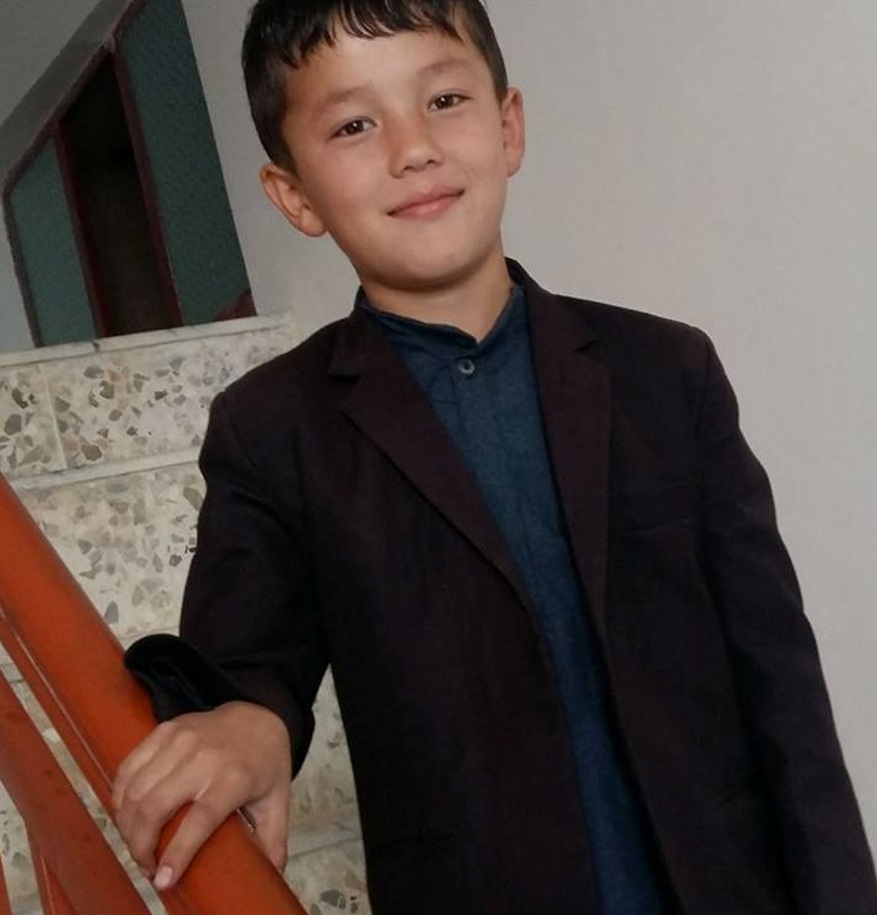
Why English is Important to Me
English is spoken in many countries around the globe. Today, everyone seems to need English daily. Apart from being an international language, it is also the language of business. There are millions of books originally written in English and then interpreted into other languages.
Learning English is important and people all over the world decide to study it as a second language. English is the official language of 53 countries. That is a lot of people to meet and speak to. English is spoken as a first language by around 400 million people.
Although I am a school boy, I know how much value English has. There are many students the same age as me who do not know English. I am honored to study English at Pioneer Institute in Bamyan. Pioneer has made a big effort to help students become experienced English speakers.
Fortunately, my family is very supportive of me. My parents always encourage me and give me plenty of time and energy. I also have a sister who is my hero. She has been helping me with my homework, English assignments, buying me school supplies and so on. There are people who often want to know English to get ahead in life. Many think that learning English is the best option for future opportunities. English is, of course, an excellent choice, but there are also many other useful languages to learn and I would like to learn some of those too.
Finally, I would like to thank my dearest sister, Sediqa Mortazavi for her contribution to write this essay. Also, she has been learning English at Pioneer since 2016.